
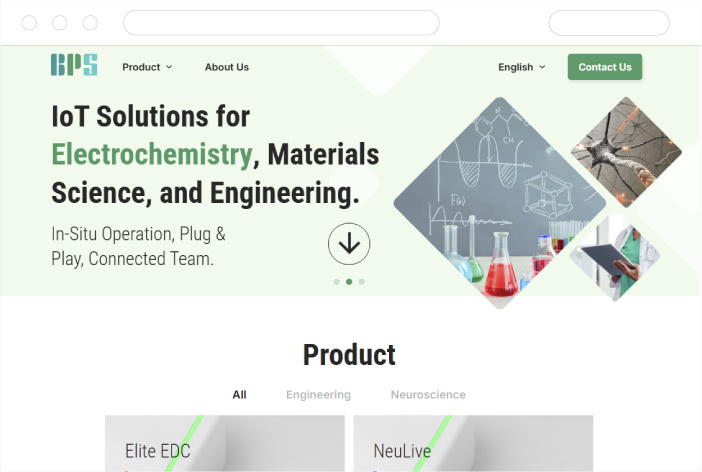
Mapping Mind and Code: Inside the Front-End Architecture of BPS
When building a digital platform for a neuroscience research firm like BPS, the challenge lies in translating complex scientific depth into an interface that feels structured, logical, and incredibly clean. Neuroscience is all about networks and precision—and we wanted the website’s architecture to mirror those exact principles.
As the web developer behind the site, my goal was to combine clean science presentation with modern engineering practices. Here is a look under the hood at how we leveraged modern development frameworks, designed seamless micro-interactions, and maintained strict visual consistency across our platform.
The Structural Backbone: WordPress + Roots Sage Framework
Neuroscience research generates a vast array of publications, study data, and updates. To manage this content efficiently without generating bloated HTML, we took a code-first approach. BPS is built on top of WordPress, but we completely stripped away traditional theme clutter by developing a custom theme using the Roots Sage Framework.
Using Sage allowed us to treat the platform like a modern web application:
- Blade Templating Engine: Sage brings Laravel's Blade template engine to WordPress. This allowed us to build cleanly modularized components for distinct sections like Elite and Neulive, ensuring that research layouts remain highly organized and reusable.
- Modern Build Tools & Asset Pipeline: Powered by modern asset bundlers, Sage automatically optimizes our scripts, compiles stylesheets, and handles asset compression out of the box, translating directly into fast page load times.
- Clean Separation of Concerns: By separating our backend data-handling logic from our frontend markup, we ensure the site delivers lean, efficient HTML without typical platform bloat.
Synaptic Movement: Motion & Fluid Transitions
In neuroscience, meaning lives in the subtle timing of signals. We brought that same philosophy to our user interface. Throughout the Elite and Neulive research spaces, we focused heavily on subtle animation to guide the visitor's focus without creating distraction.
- Hardware-Accelerated Transitions: To guarantee that every fade-in and hover interaction runs at a locked 60 frames-per-second, we exclusively animated properties like
transformandopacity. This triggers the user's GPU rather than taxing the CPU, eliminating micro-stutters even on mobile devices. - Scroll-Driven Reveal States: Elements materialize smoothly onto the page as you read through research findings. The browser only triggers these entry animations at the exact moment they enter the viewport, keeping scroll performance silky smooth.
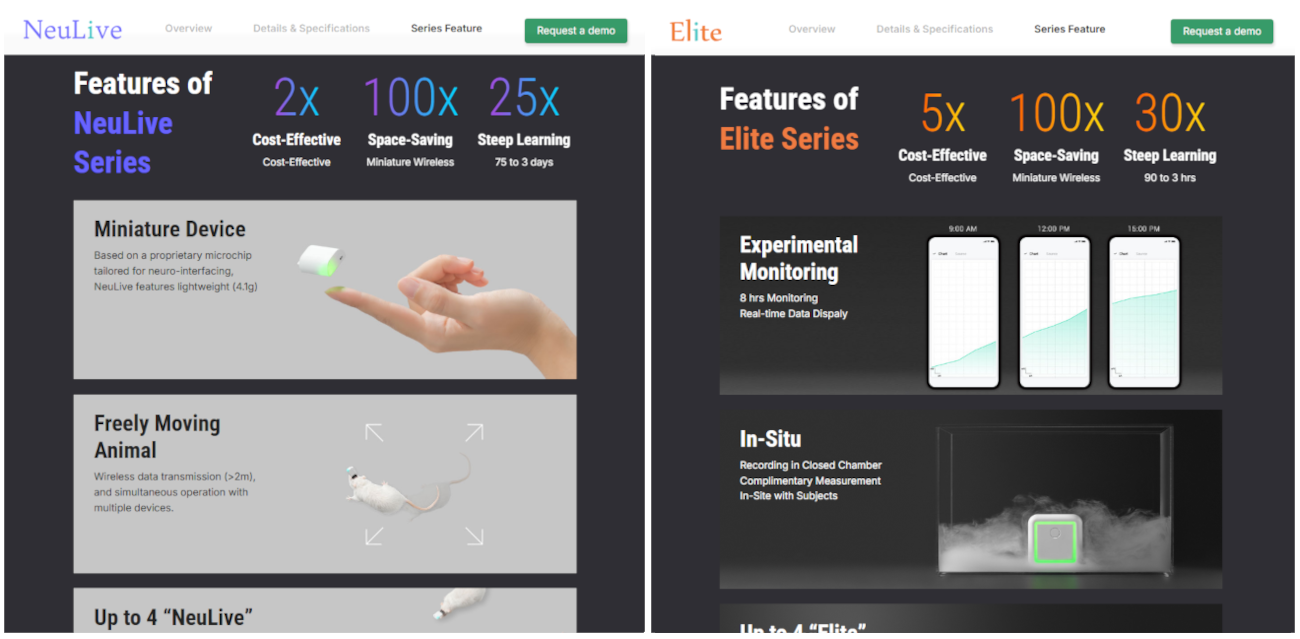
Strict Visual Consistency
Scientific clarity requires structure, so we maintained a meticulous level of design consistency across every single page.
We implemented a strict, unified design system mapped directly into our styles. Every font size, line-height, grid gutter, and color value is controlled through centralized configurations. Whether you are navigating the structured data of the Elite dataset or exploring the bold grids of our Neulive initiative, the site maintains an identical spatial rhythm and visual logic.